
Chimney Leak Repair
Get reliable Chimney Leak Repair to stop moisture, prevent stains, and protect your masonry Fix leaks early to avoid costly structural damage

Inspections

Fires Prevented

Chimney Sweeps

Chimney Repairs
What Chimney Leak Repair Involves
Most homeowners think fixing chimney leaks means sealing one obvious crack and calling it done. That’s not how it works. Chimney leak repair is really about tracking down where water is getting in, then fixing the specific problem causing it. Sometimes it’s one issue. Often it’s a combination.
Water can enter a chimney system through at least five common failure points. Flashing can separate from the roof or corrode through. The chimney crown can crack from freeze-thaw cycles. A missing or damaged cap leaves the flue wide open to rain. The brick and mortar can deteriorate and let water soak through. And the liner itself can develop cracks that allow moisture into the masonry.
Here’s the thing. You can’t tell what’s leaking just by looking at water stains on your ceiling. A stain near the fireplace might come from failed flashing, not the chimney itself. Water running down the inside of the flue could mean a missing cap or a cracked crown. That’s why repairing leaking chimneys always starts with figuring out the actual entry point.
Why One Fix Doesn't Solve Everything
What usually happens is a homeowner sees water damage and assumes the whole chimney needs rebuilding. Sometimes that’s true. More often, it’s one or two specific components that failed. Replacing flashing stops roof junction leaks. Rebuilding the crown stops water from soaking into the masonry from the top. Installing a chimney cap keeps rain out of the flue.
The problem is when someone patches the wrong spot. Sealing the brick won’t help if the real issue is deteriorated flashing. And that’s where it gets expensive. Water keeps coming in, the damage spreads, and what started as a $500 flashing repair turns into a $3,000 masonry restoration.
Chimney waterproofing repairs only work when they target the actual source. That’s why the diagnostic part matters as much as the fix itself.
How Chimney Leak Repairs Are Performed
Most chimney leak repairs start with a thorough inspection. A professional will check the crown, flashing, masonry, and cap to pinpoint exactly where water is getting in. Here’s the thing. You can’t fix a leak properly if you don’t know its source. They’ll often use a moisture meter on interior walls and attic spaces near the chimney to track where water has traveled. That helps confirm the entry point.
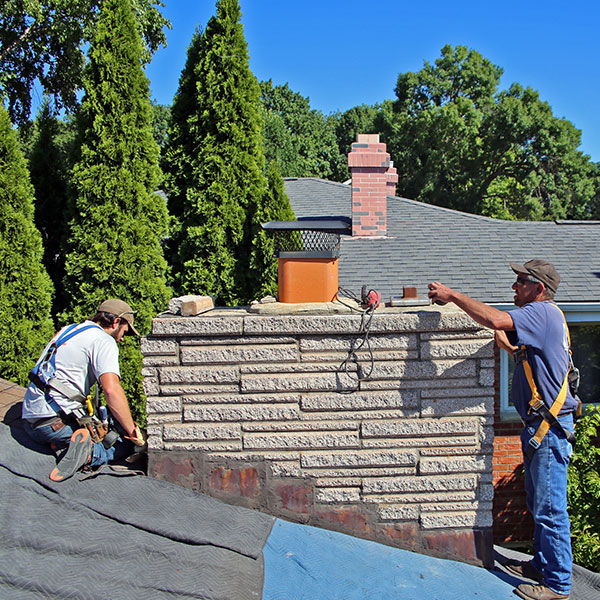
Once the problem is identified, the crew sets up ladders, scaffolding, or roof anchors depending on the height and pitch. Safety gear goes on first. They’ll also protect landscaping and lay tarps if they’re working with sealants or mortar.
The Repair Itself
What happens next depends entirely on what’s leaking. If the chimney crown is cracked, they’ll clean out the damaged area, remove loose material, and apply a flexible crown sealant or a new mortar cap. Crown repairs usually take a few hours and need dry weather to cure properly.
If flashing is the issue, the repair is more involved. The roofer or mason will remove shingles around the base, pull out the old flashing, and install new stepped or counter flashing. This gets embedded into the mortar joints and sealed with caulk rated for metal and masonry. Flashing work can take half a day or more depending on chimney size.
For deteriorated bricks or mortar joints, they’ll grind out the damaged sections and repoint them with fresh mortar that matches the original mix. Brick replacement follows the same process but includes removing and resetting individual units.
After the repair, most pros will run a hose test or wait for rain to verify the leak is gone. They’ll also check inside again with a moisture meter to make sure no water is still migrating through the structure.
Why Addressing Chimney Leaks Matters
Water is one of the most destructive forces your chimney can face. Most homeowners don’t realize that a small leak doesn’t just stay small. It finds pathways into masonry, framing, and interior spaces where it causes damage that compounds over time.
Here’s what that really means. When water penetrates brick or mortar, it sits in tiny cracks and pores. During winter freezes, that water expands as it turns to ice. The expansion pushes masonry apart from the inside. When temperatures rise, the ice melts and leaves behind slightly larger gaps. The next rain fills those gaps with more water, which freezes again and widens them further.
This freeze-thaw cycle repeats dozens of times each winter in Indianapolis. Over a few seasons, tight mortar joints become loose. Solid bricks start to crumble at the edges. What began as a hairline crack becomes a structural problem that requires rebuilding sections of the chimney.
From Masonry to Framing
Water doesn’t stop at the bricks. It travels through the chimney structure and reaches the wooden framing where your chimney meets the roofline. Wood that stays wet develops rot. The rot spreads through joists, rafters, and sheathing. You might not see this damage until someone opens up a wall or attic space during another project.
Inside your home, the signs are more obvious. Water stains appear on ceilings near the chimney. Paint bubbles and peels. Drywall softens and crumbles. If the leak continues, mold takes hold in the damp materials.
The pattern is always the same. A minor leak that costs a few hundred dollars to fix becomes a multi-thousand dollar repair job when it’s ignored for a couple of years. The water doesn’t care if you notice it or not. It just keeps working its way deeper into your home’s structure.
Common Misconceptions About Fixing Chimney Leaks
Most homeowners think all chimney leaks come from the same spot. That’s not how it works. Water can enter through the crown, the flashing, the mortar joints, or even the brick itself. Each entry point needs a different fix. Slapping caulk on the crown won’t help if the real problem is deteriorated flashing around the base.
Here’s another thing that trips people up. Chimney leaks and roof leaks aren’t the same, even when water shows up in the same area. A roof leak usually comes from damaged shingles or underlayment. A chimney leak happens where the chimney meets the roof or where water gets into the chimney structure itself. The repair methods are completely different. Fixing one doesn’t fix the other.
Plenty of Indianapolis homeowners reach for a tube of caulk thinking it’ll solve everything. It won’t. Caulk might temporarily seal a small crack in the crown, but it doesn’t address why the crack formed or whether water is already inside the masonry. If the flashing has pulled away from the chimney, caulk just covers the gap without creating a proper seal. It’s a band-aid, not a repair.
Some people assume leaks only happen during heavy storms. Light rain can cause just as much trouble, especially if it lasts for hours. Water doesn’t need force to get in. It just needs time to find the weak spots and soak through.
And here’s what catches homeowners off guard. Visible damage doesn’t always show you where the leak started. Water travels. It can enter near the top of the chimney and run down inside the structure before showing up on your ceiling ten feet away. That stain you’re looking at? It’s probably not directly below the actual problem. The real entry point might be nowhere near where you see the water damage inside your home.
Practical Guidance for Homeowners
Call for an inspection when you see water stains on ceilings near the chimney, notice dampness in the firebox after rain, or spot pieces of mortar in the fireplace. These aren’t problems that fix themselves. Most homeowners wait too long because the signs seem minor at first. But what starts as a small leak can quickly damage the flue liner, rot the wood framing around the chase, or weaken the masonry enough to need a complete rebuild.
A proper inspection should include the roof line, flashing details, crown condition, and the interior flue. The inspector should explain what they find in plain terms and show you photos of problem areas. If someone recommends a repair, ask them to walk you through why it’s needed and what happens if you wait. Good professionals explain the cause, not just the symptom. If they can’t tell you why the leak started, they might not fix the real problem.
Mid West Weather and Soil Movement
Indianapolis sits on expansive clay soil that swells when wet and shrinks during dry spells. This movement shifts foundations and can crack chimney masonry or pull flashing away from the roof deck. You’ll notice this most during transition seasons when we go from heavy spring rains to summer drought. The soil shifts, the house settles slightly, and suddenly a chimney that was fine last year starts leaking.
Summer storms dump water fast, overwhelming aging flashing or deteriorated crowns. Winter freezes are less common here, but when temperatures drop below freezing after rain, trapped moisture expands inside cracks and makes them worse overnight.
For basic maintenance, keep the crown sealed and check flashing annually before storm season. Clear debris from around the base where the chimney meets the roof. Make sure the cap is secure and the mortar joints aren’t crumbling. Catching small issues early prevents expensive structural repairs later. Most chimney water damage happens slowly until it doesn’t.
Chimney Leak Repair FAQs
How do you know if your chimney is leaking?
Water stains on the ceiling or walls near your fireplace are the most obvious sign. You might also notice dampness inside the firebox itself, especially after heavy rain. Some homeowners smell musty odors coming from the chimney, which happens when moisture sits in the masonry and doesn’t dry out. White staining on the outside bricks, called efflorescence, means water is moving through the material and pulling salts to the surface. If you hear dripping sounds inside the chimney or see rust on the damper, water is getting in somewhere. The tricky part is that leaks don’t always show up right away. Sometimes water travels along the flue liner or through cracks before appearing several feet away from the actual entry point.
Can a leaking chimney be fixed?
Most chimney leaks can be fixed once you identify where the water is entering. The repair method depends on the source. If the chimney crown is cracked, a mason can resurface it or apply a sealant. Missing or damaged flashing usually requires removing some roofing material, installing new metal, and resealing the connection. Damaged mortar joints need repointing, which means removing deteriorated mortar and filling it with fresh material. In cases where the brick itself has become porous from years of freeze-thaw cycles, a waterproofing treatment helps. What matters most is addressing the root cause, not just the visible damage. Patching a water stain inside your home doesn’t stop the leak. It just hides the problem until more damage builds up behind the walls.
What causes a chimney to leak when it rains?
Rain enters through compromised areas that were designed to keep it out. The chimney crown at the top acts like a roof for the structure, but it cracks over time from temperature changes. Those cracks become entry points. Flashing, the metal seal between the chimney and roof, can pull away or corrode. That gap lets water run straight down the outside of the chimney into your attic. Mortar joints between bricks deteriorate, especially on the side that takes the most weather. Here’s the thing: chimneys take a beating. They extend above the roofline where they’re exposed to wind, rain, ice, and full sun. Masonry absorbs water, then expands when it freezes. Over time, this cycle breaks down even well-built chimneys.
Will a leaking chimney get worse over time?
Every leak gets worse if you ignore it. Water breaks down masonry, corrodes metal components, and rots wood framing around the chimney. A small crack in the crown becomes a larger one. Moisture inside the chimney causes the flue liner to deteriorate, which creates safety risks beyond just water damage. In Indianapolis, we get intense summer heat followed by cold snaps in winter. That temperature swing accelerates deterioration once water finds a way in. What starts as a minor stain can turn into major structural repairs if the chimney foundation settles or bricks start spalling. Most homeowners don’t realize how quickly damage progresses once moisture has a foothold in the masonry.
Conclusion
Finding water coming through your ceiling or down your walls because of a chimney leak feels alarming. Most homeowners worry about how much damage has already happened and what it’s going to cost to fix. That reaction makes sense. Water inside your house never belongs there.
But here’s the thing. Chimney leaks are a solvable problem when you take the time to figure out what’s actually going on. A water stain on the ceiling tells you something is wrong, but it doesn’t tell you why. The fix that works depends entirely on identifying the real source. Flashing fails in one specific way. A cracked crown creates a different problem. Missing mortar joints let water in through a path that has nothing to do with either of those issues.
Understanding the difference between these causes helps you make decisions that actually solve the problem instead of just covering it up temporarily. When you know what’s broken, you can fix it correctly the first time. That saves money and prevents the same leak from coming back next season.
Chimneys do important work. They move dangerous gases out of your living space safely. Keeping them weathertight matters for protection and function. Dealing with a chimney water leak quickly keeps small problems from turning into structural issues that cost significantly more to repair later.
The good news is that most chimney leaks respond well to straightforward repairs once you know where the water is getting in. Awareness and appropriate action keep these systems working the way they should for years.
Frequently Asked Questions
How Often Should I Have My Chimney Cleaned?
Most homeowners should have their chimney inspected once a year and cleaned as needed. If you regularly use a wood-burning fireplace, creosote can build up inside the flue over time. This buildup is highly flammable and can increase the risk of a chimney fire. Even if you don’t use your fireplace often, debris, animal nests, and moisture can still create safety concerns. An annual chimney inspection helps ensure your fireplace and chimney system remain safe, clean, and ready to use throughout the year.
How Much Does a Chimney Inspection Cost?
The cost of a chimney inspection depends on the type of inspection required and the condition of the chimney. Basic inspections are typically less expensive, while more detailed inspections may include specialized equipment such as chimney cameras to evaluate the entire flue system. A professional inspection can help identify potential issues before they become costly repairs, making it one of the most valuable investments homeowners can make for their fireplace and chimney.
Is a Chimney Inspection Really Necessary If Everything Seems Fine?
What Are the Signs That My Chimney Needs Repair?
Will Homeowners Insurance Cover Chimney Repairs?
What Is Included in a Professional Chimney Inspection?
A professional chimney inspection typically includes a thorough evaluation of the chimney structure, fireplace, flue, chimney cap, crown, masonry, and other visible components. The technician checks for damage, blockages, creosote buildup, water intrusion, and potential safety hazards. Depending on the inspection level, specialized camera equipment may also be used to inspect areas that cannot be seen from the ground or fireplace opening. After the inspection, homeowners receive recommendations for any cleaning, maintenance, or repairs that may be needed.