
Blog
Chimney Flashing Repair: Where Leaks Come From and What the Repair Covers
Chimney leaks often start at the flashing, not the crown or cap. Here is how to tell the difference and what chimney flashing repair covers in Indianapolis homes.
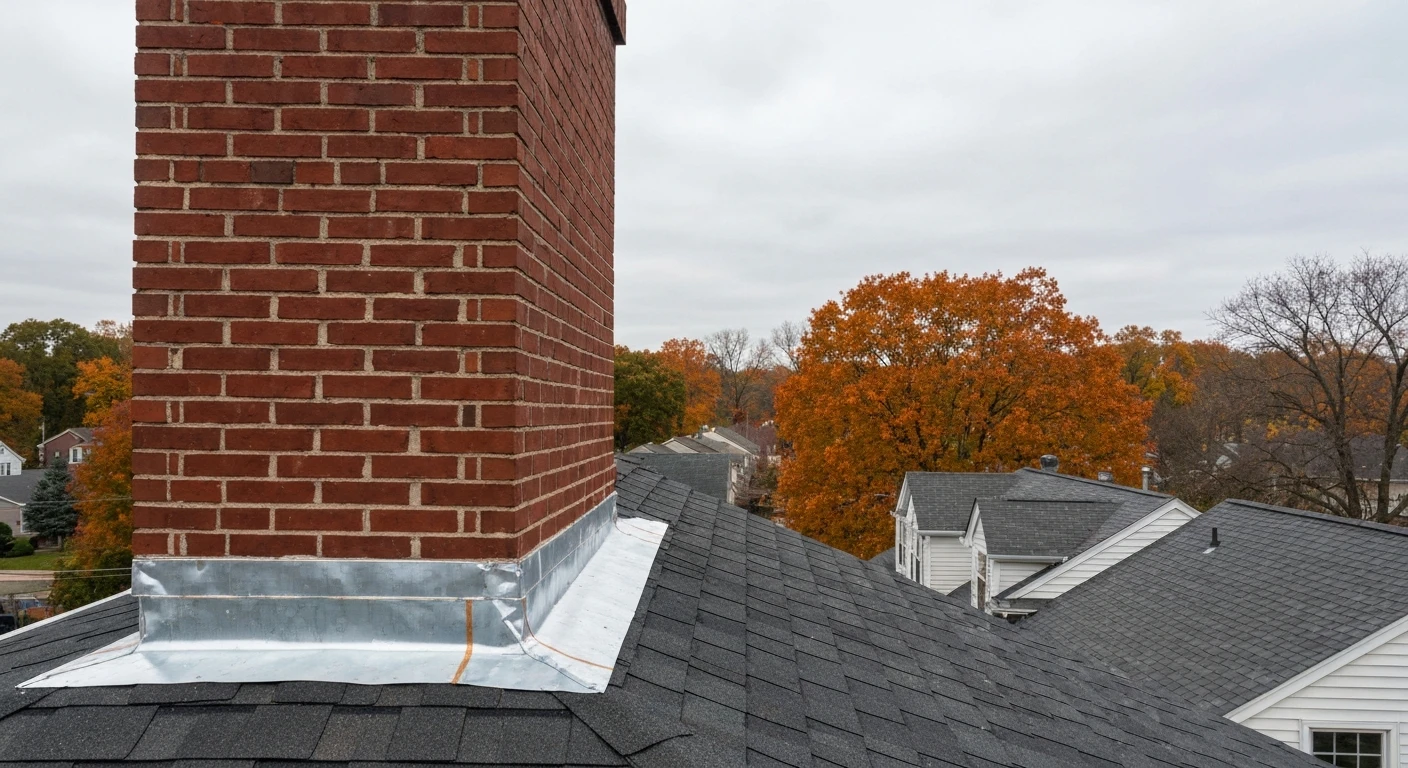
Water stains on your ceiling near the fireplace are easy to misread. Most people assume the chimney crown cracked or a cap blew off in a storm. What usually happens is the leak starts lower, right where the chimney meets the roof. That junction is sealed by metal flashing, and when it fails, water finds a straight path into your home. Chimney flashing repair is one of the more common fixes on Indianapolis rooftops, and understanding what it covers helps you ask the right questions before anyone climbs up there.
What Chimney Flashing Is and Why It Leaks
Flashing is sheet metal, usually galvanized steel or aluminum, installed where the chimney base meets the roof surface. It runs in two layers. The base flashing sits against the chimney and bends onto the roof deck. The counter flashing gets embedded into the chimney mortar joints above it and overlaps the base layer. Together they channel water away from that joint.
The problem is that chimneys and roofs move at different rates. Temperature swings in Indianapolis, from below freezing in January to above 90°F in July, cause both materials to expand and contract. Over time, the mortar holding the counter flashing cracks. Caulk dries out and pulls away. The base flashing lifts at the edges. Any gap becomes a water entry point, and a small gap can let in a surprising amount of water during a hard rain.
How to Tell If the Leak Is Coming from the Flashing, Crown, or Cap
This is where a lot of homeowners get confused, and honestly, some contractors do too. The crown is the concrete cap poured over the top of the chimney structure. The cap is the metal hood sitting above the flue opening. The flashing wraps the base where the chimney exits the roof. All three can leak, but they leave slightly different clues.
A crown leak usually shows up as water inside the firebox or staining on the smoke chamber walls. A missing or damaged cap lets rain fall directly into the flue. Flashing leaks tend to show up on the ceiling or walls adjacent to the chimney, often a foot or two away from the fireplace itself. If you see water staining on attic rafters near the chimney base, that points to flashing before anything else. A chimney inspector can confirm the source by running water with a hose while someone watches inside.
What Materials Are Used in Chimney Flashing Repair
Galvanized steel is the most common material on older Indianapolis homes, typically 26-gauge or 28-gauge sheet metal. It holds up well but can rust at cut edges after 15 to 20 years. Aluminum is lighter and rust-resistant, though it reacts with masonry over long periods and can corrode where it contacts mortar directly.
Copper flashing is the longest-lasting option, often cited as 50-plus years when installed correctly. It costs more upfront and requires a skilled installer because copper expands more than steel. Lead flashing is still used in some historic restoration work, but it is less common on residential jobs today. For most repairs, the counter flashing gets re-embedded with new mortar or hydraulic cement, and fresh sealant fills the overlap seam. The sealant matters, polyurethane-based products outlast standard roofing caulk by several years in freeze-thaw conditions.
How Indianapolis Weather Shortens Flashing Lifespan
Indianapolis sits in a climate zone that stresses flashing harder than either the deep south or the dry west. The city averages around 25 inches of snowfall per year, with frequent freeze-thaw cycles between November and March. Water gets into a hairline crack, freezes, expands, and widens the gap. By spring, what started as a small separation has opened enough to let in real volume during rain.
Summer brings its own stress. Thermal expansion on a dark roof surface can exceed 100°F on a sunny July afternoon. The metal moves, the mortar does not move at the same rate, and the bond between them weakens. Most flashing installs in this region last 15 to 30 years before needing attention, but homes with south or west-facing roof slopes tend to reach that point on the shorter end. Overhanging trees that keep the chimney shaded and damp year-round also accelerate corrosion.
What the Chimney Flashing Repair Process Looks Like
A standard chimney flashing repair starts with removing old caulk and loose mortar from the counter flashing joints. The technician checks whether the existing metal is still sound or has rusted through. If the metal is solid, re-pointing the mortar joints and applying fresh sealant may be all that is needed. That type of repair takes a few hours.
When the metal itself is compromised, chimney flashing repair means cutting out the old base and counter flashing, cleaning the mortar joints, and installing new material in both layers. The counter flashing gets set into freshly cut reglet grooves in the masonry, then pointed with mortar. The base flashing weaves under the roofing shingles at the sides and bottom. A step flashing pattern runs up both sides of the chimney, with each piece overlapping the one below it. Done correctly, the finished repair should shed water completely without relying on sealant alone.
Where to Look Inside Your Home for Early Signs of a Chimney Flashing Leak
- Water stains or discoloration on the ceiling directly beside the chimney
- Damp or peeling drywall on the wall shared with the chimney chase
- Rust streaks on the firebox floor or smoke chamber walls
- Efflorescence, a white powdery residue, on the chimney’s interior masonry
- Musty smell near the fireplace after a rainstorm
- Staining on attic rafters or sheathing within two feet of the chimney base
- Bubbling or softened paint on walls adjacent to the fireplace
- Chimney flashing repair becomes necessary when any two of these signs appear together
When Flashing Repair Is Enough and When the Full System Needs Replacement
If the metal is in good shape and the leak is coming from failed sealant or loose mortar, a targeted repair makes sense. That is the more common scenario on chimneys under 20 years old. The metal gets re-secured, joints get re-pointed, and the repair holds for another decade or more with basic annual inspection.
When the base flashing has rusted through, or when the counter flashing has separated from the masonry entirely and pulled the mortar with it, replacement is the more reliable path. Patching corroded metal with sealant buys time, not a permanent fix. If the chimney masonry is also deteriorating, crown work and tuckpointing often happen at the same visit so the flashing repair is not compromised by ongoing mortar loss above it. Pairing flashing work with a chimney inspection keeps you from addressing one problem while missing another one two feet away.
Frequently Asked Questions
How can I tell if my chimney is leaking from the flashing or the roof?
The location of interior staining is the first clue. Flashing leaks usually appear on the ceiling or upper wall right beside the chimney, not in the middle of the room. A roof leak from a damaged shingle shows up further from the chimney, often offset by several feet depending on roof pitch.
A simple test: have someone run water from a garden hose low on the chimney base while you watch the attic. If water appears at the base of the chimney before you wet higher areas, the flashing is the source. A chimney inspector can confirm this during a standard Level 1 inspection.
How long does chimney flashing last before it needs repair?
Galvanized steel flashing on an Indianapolis home typically lasts 15 to 25 years before showing significant wear. Aluminum runs a similar range. Copper can last 50 years or more. The actual lifespan depends on roof slope, sun exposure, tree cover, and whether the original install embedded the counter flashing into the mortar or just relied on caulk.
Homes that skip annual chimney maintenance tend to reach the repair point faster. Sealant that dries out and cracks is easy to catch and address early. Left alone, it opens into a gap that accelerates metal corrosion underneath.
Can chimney flashing be repaired without replacing the whole chimney crown?
Yes, in most cases chimney flashing repair is a separate job from crown repair. The flashing sits at the base of the chimney where it exits the roof. The crown sits at the very top. They fail for different reasons and can be addressed independently.
That said, if both are failing at the same time, combining the work on one visit saves money on labor and staging. A chimney inspector will tell you the condition of both during the same visit so you can make an informed decision about sequencing.
Does chimney flashing repair require a roofer or a chimney specialist?
Either can do the work, but the best results come from whoever has experience with both the masonry and the roofing sides of the joint. Roofers are strong on the shingle integration. Chimney specialists understand how mortar joints hold counter flashing and what happens when masonry deteriorates under the metal.
For a straightforward reseal on sound metal, an experienced roofer handles it fine. When the counter flashing needs re-embedding into mortar joints, or when the chimney masonry is involved, a chimney specialist is the more reliable choice. Complex cases sometimes call for both trades working together.
The Bottom Line on Chimney Flashing Leaks
Most chimney leaks that show up on ceilings and walls trace back to the flashing, not the crown or the cap. Catching it early, before the metal corrodes or the water reaches framing, keeps the repair straightforward. Chimney flashing repair in Indianapolis gets harder and more expensive the longer moisture sits behind finished walls. A yearly look at the flashing seams, either from the attic or during a chimney inspection, is the simplest way to stay ahead of it.