
Blog
Chimney Crown Repair in Indianapolis: What to Know
Indianapolis freeze-thaw cycles crack chimney crowns faster than most homeowners expect. Here is what chimney crown repair involves and when to act.
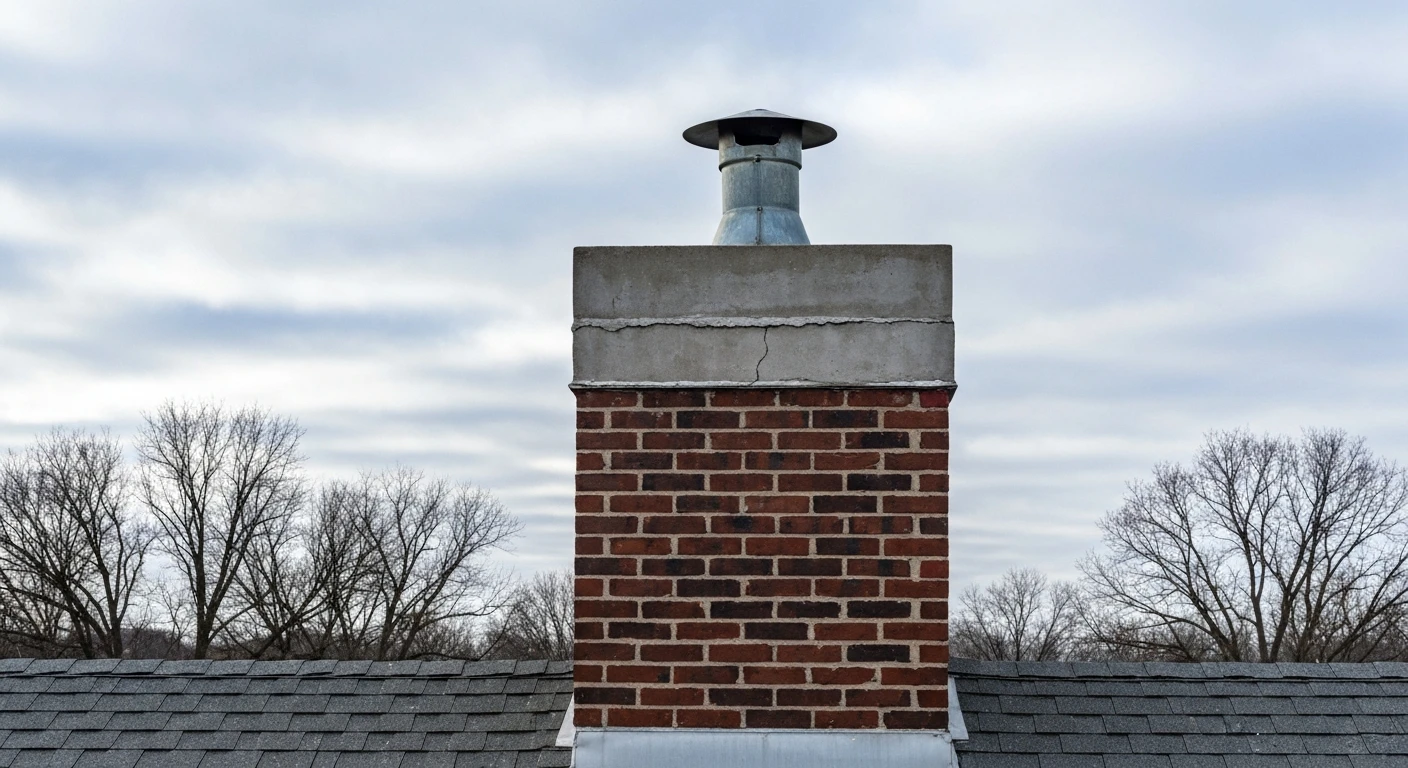
Most homeowners in Indianapolis never think about the top of their chimney until water shows up somewhere it should not. The chimney crown is a small concrete slab that covers the gap between the flue and the outer edge of the chimney. When it cracks, water gets into the masonry below. Chimney crown repair is one of those fixes that is straightforward when you catch it early. Ignore it, and the damage gets expensive fast.
What a Chimney Crown Is and How It Differs from a Chimney Cap
The chimney crown is a concrete or mortar layer poured across the top of the chimney stack. It slopes slightly outward so water runs away from the flue opening and off the sides of the chimney. A well-built crown overhangs the chimney face by about two inches, which keeps drips from running down the brick.
The chimney cap is something different. That is the metal cover that sits directly over the flue opening. It blocks rain, animals, and debris from dropping straight into the firebox. Both the crown and the cap do separate jobs. You need both working correctly. A cap without a solid crown still lets water soak into the masonry all around the flue liner.
Older Indianapolis homes, especially those built before the 1980s, sometimes have crowns made from plain mortar rather than a proper concrete mix. Those mortar crowns crack much faster. A proper crown uses a stronger concrete blend and should be at least two inches thick at the edges.
How Indianapolis Freeze-Thaw Cycles Break Down Chimney Crowns
Central Indiana averages around 100 freeze-thaw cycles per year. That number matters because each cycle puts stress on masonry. Water seeps into a small surface crack, freezes overnight, expands, then thaws in the afternoon. Each pass opens the crack a little wider.
Chimney crowns take more abuse than most parts of the house because they sit fully exposed at the top of the structure. There is no overhang for shade, no siding for protection. Sun, rain, and ice work on that surface every day from October through March. A crown that looked fine in September can have visible fractures by February.
What usually happens is a hairline crack forms in the first three to five years after installation. If you catch it then, a flexible elastomeric sealant can seal it before water gets underneath. If you miss that window, the crack widens, chunks of crown break away, and water reaches the brick and the flue liner below.
Signs Your Chimney Crown Is Cracked or Failing
You can spot several warning signs from the ground or with a basic inspection from the roofline. Not all of them require climbing onto the roof to see.
- Visible cracks running across the top surface of the crown, even thin ones
- Chunks or pieces of concrete on the roof or in the gutters near the chimney
- White staining (efflorescence) on the upper brick courses, which signals water moving through the masonry
- Spalling brick near the top of the chimney stack, where freeze-thaw damage shows as flaking or popping face material
- Water stains on the ceiling or wall near the fireplace after heavy rain
- A rusted firebox damper, which often means water has been running down the flue for more than one season
- Deteriorating mortar joints in the top two feet of the chimney, sometimes called the crown area
Not every one of these signs points only to the crown. A chimney inspection will confirm exactly where water is getting in. But two or more of these signs together is a strong reason to get someone up there before winter.
What Chimney Crown Repair Actually Involves
The repair approach depends on how far the damage has gone. Minor surface cracking without deep fractures is a good candidate for a resurfacing product. Larger cracks that go all the way through, or a crown with missing sections, usually need partial or full reconstruction.
For surface-level chimney crown repair, a technician cleans the crown surface, removes loose material, and applies a flexible elastomeric coating like CrownCoat. This product bonds to the existing concrete and flexes slightly during freeze-thaw movement instead of cracking again. It typically needs one to two coats and cures within a few hours in dry weather.
When the crown is too far gone for a coating, the old material comes off and a new crown gets cast in place using a high-strength concrete mix. The technician forms the slope and overhang correctly so water sheds away from the flue and the brick. This is more involved work and usually includes inspecting the top few courses of brick while everything is accessible.
Either way, the repair happens at the top of the chimney and requires safe roof access. Most repairs take one to three hours once a technician is on site.
CrownCoat and Cast-in-Place Crown Options for Central Indiana Homes
CrownCoat is a product from ChimneySaver, widely used across the industry for chimney crown repair on crowns with surface cracks and moderate wear. It bonds well to both concrete and mortar crowns, dries to a flexible finish, and carries a manufacturer warranty. For crowns that are structurally sound but showing early cracking, it is a solid fix.
Cast-in-place crowns involve forming and pouring a new concrete crown directly on top of the chimney. Technicians use a parging mix or a fiber-reinforced concrete blend, build the correct slope, and extend the overhang past the chimney face. This is the right call when the original crown has crumbled significantly or when large sections are missing.
Some older Indianapolis chimneys were never built with a proper crown at all. In those cases, the first step is building one from scratch. The materials and labor vary by chimney size and height, but the goal is always the same: a sloped, overhanging surface that sheds water away from the masonry below.
What Happens If You Ignore a Cracked Crown Through Another Indianapolis Winter
Water damage in masonry moves slowly and then all at once. A cracked crown lets water into the top of the chimney stack. That water saturates the brick and mortar through the winter. By spring, you may see spalling brick, failed mortar joints, or a shifted crown piece.
Left alone for two to three winters, the damage often reaches the flue liner. A damaged liner is a safety issue as well as a repair issue. Chimney crown repair at the surface level costs far less than relining a flue or rebuilding the top section of a chimney stack in brick.
Water can also travel down the outside of the flue liner and show up as ceiling stains, damaged drywall near the fireplace, or rust on the damper. By the time interior water damage appears, the crown has usually been failing for more than one season.
Frequently Asked Questions
What is the difference between a chimney crown and a chimney cap?
The chimney crown is the concrete or mortar slab that covers the entire top of the chimney structure, sloping outward to shed water. The chimney cap is the metal cover that sits over the flue opening itself, blocking rain, animals, and debris from entering the flue. Both parts protect the chimney, but they are in different locations and do different jobs. You can have a functioning cap and still have a failing crown letting water into the surrounding masonry.
Can a chimney crown be patched or does it need full replacement?
It depends on how deep the cracks go and how much material is missing. Surface cracks without structural separation can be sealed with a flexible elastomeric product like CrownCoat. Crowns with cracks that go all the way through, missing chunks, or underlying masonry damage usually need partial or full reconstruction. A technician can tell you which situation you have after a visual inspection from the roofline.
How long does a repaired chimney crown last in Central Indiana weather?
A properly rebuilt cast-in-place crown using fiber-reinforced concrete should last 20 years or more with normal maintenance. A CrownCoat resurfacing on a structurally sound base typically holds 10 to 15 years. The bigger factor is whether the crown was built with the correct slope and overhang in the first place. Crowns that drain water away from the brick consistently outlast those that pool water at the edges.
Does a cracked chimney crown cause water damage inside the house?
Yes, it can. Water entering through a cracked crown soaks into the brick and mortar below. Over time it travels down the outside of the flue liner and can show up as staining on ceilings or walls near the fireplace, rust on the damper, or moisture damage to the firebox interior. Most homeowners do not connect interior water stains to a failing crown because the entry point is far away from where the damage appears. Chimney crown repair stops that water path before it reaches the living space.
The Bottom Line on Crown Damage
Chimney crown repair is one of the more cost-effective masonry fixes available to homeowners. The crown is a small surface, the repair materials are well-established, and catching damage early keeps the work simple. Indianapolis winters give cracked crowns very little grace period. A crown that is cracking now will be worse by March. A quick inspection in fall or after a harsh winter is the most reliable way to catch it before the damage spreads to the brick, the liner, or the interior of the home.