
Blog
Chimney Liner Replacement in Indianapolis: Stainless Steel, HeatShield, and Clay Tile Options Explained
Need chimney liner replacement in Indianapolis? Learn what stainless steel, HeatShield, and clay tile liner options each involve for local homeowners.
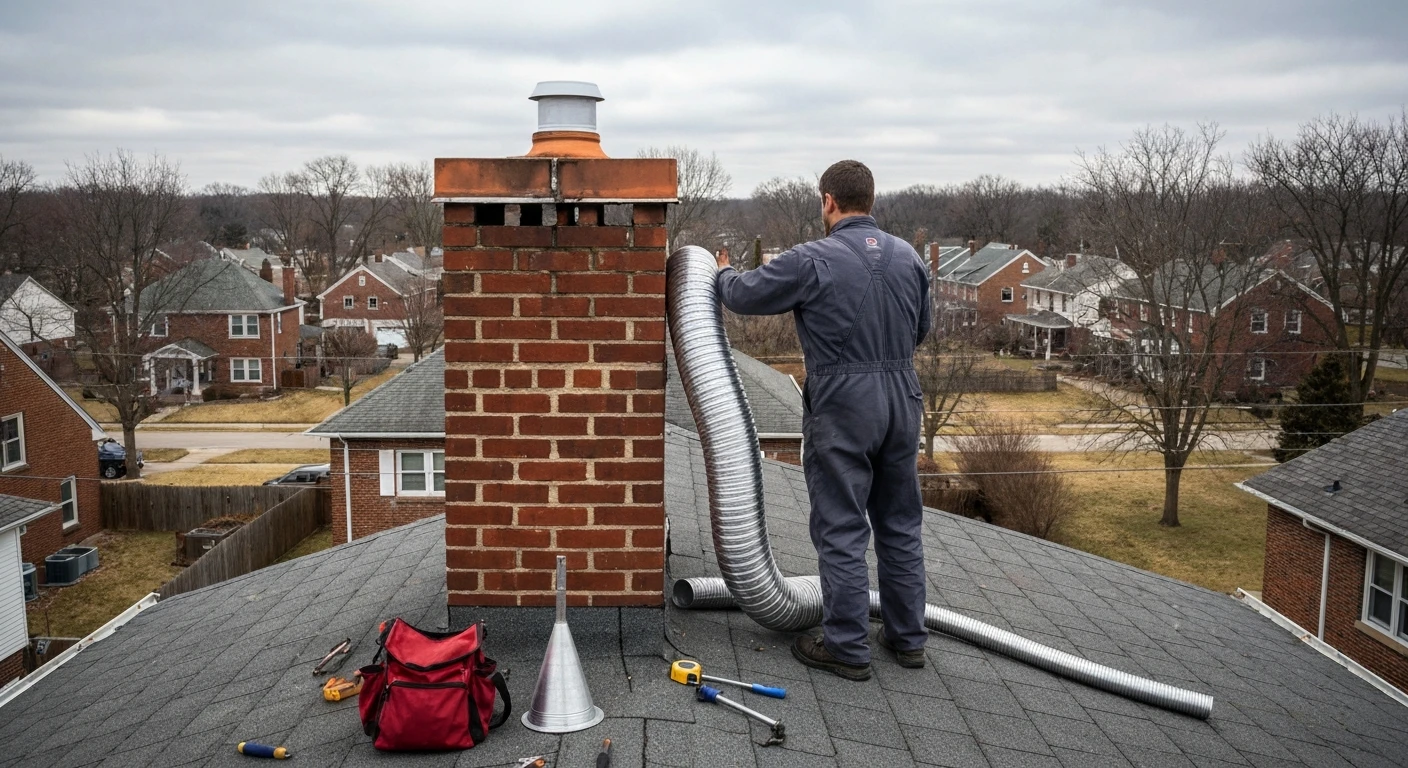
Chimney liner replacement comes up more often than most Indianapolis homeowners expect. The liner is the channel inside your chimney that moves combustion gases safely out of the house. When it cracks, spalls, or deteriorates, those gases can leak into living spaces or start a fire inside the chimney wall itself. Three liner options show up most often in older Indianapolis homes: stainless steel, HeatShield resurfacing, and clay tile. Each one fits a different situation. This post walks through what each option involves so you can have an informed conversation with a chimney contractor.
What a Chimney Liner Does and Why It Matters
The liner does two jobs at once. First, it keeps hot gases and embers contained so they exit through the flue instead of seeping into wood framing. Second, it protects the masonry from acidic condensation that forms when combustion gases cool on their way up.
Without a functioning liner, creosote and moisture eat into the mortar joints between the flue tiles. Over several heating seasons, that opens gaps where carbon monoxide can migrate into the home. The National Fire Protection Association standard NFPA 211 requires a lined flue for all solid fuel appliances, and most gas inserts as well.
Liners in Indianapolis homes take a beating from the freeze-thaw cycles here. A tile that looks fine in October can have a new crack by February after water gets in and expands.
How to Tell When a Chimney Liner Needs Replacing
A Level 2 chimney inspection with a camera is the only reliable way to see liner condition. Visual checks from the firebox or the chimney cap show almost nothing. Camera inspections typically reveal cracked clay tiles, open mortar joints, missing tile sections, or heavy creosote buildup hiding damage underneath.
A few signs at the firebox level point toward liner problems. White mineral staining on the firebox walls suggests moisture is moving through cracks in the liner. A strong smoky smell in the house when the fireplace is not in use often means gases are leaking through liner gaps. Deteriorated mortar falling into the firebox is another signal worth taking seriously.
If your home was built before 1940, the original clay liner has been in service for 80 or more years. Many of those liners are past their useful life, even without visible symptoms at the firebox.
Stainless Steel Liner: What It Is and When It Is the Right Choice
A stainless steel liner is a flexible or rigid metal tube, usually 316 alloy for wood-burning applications, that runs the full length of the flue. Contractors insert it from the top of the chimney down to the firebox or appliance connection. The space between the steel tube and the old tile is usually filled with an insulating material to improve draft and reduce condensation.
Stainless steel works well when the existing clay tiles are cracked or missing sections. It also suits gas inserts and wood stoves because the diameter can be sized precisely to match the appliance’s output. Undersized flues cause poor draft; oversized flues cause excess condensation with gas appliances. A steel liner lets the contractor dial in the right diameter for the job.
Properly installed 316-alloy liners carry manufacturer warranties of 20 to 25 years for wood use and lifetime warranties for gas. Actual service life depends on how often the fireplace is used and whether annual sweeping keeps creosote from building up.
HeatShield Liner Repair System: How It Works and What It Costs to Know About
HeatShield is a ceramic resurfacer that coats the inside of an existing clay tile flue. Contractors mix the material on site, apply it in passes using a specialized tool that travels up the flue, and let it cure to form a new smoke-tight surface. It bonds to the tile and fills gaps, cracks, and open mortar joints along the way.
This system works best when the clay tiles are still mostly intact but have hairline cracks, eroded mortar joints, or a rough interior surface that traps creosote. It is not appropriate when tiles are missing entirely or when sections of the liner have collapsed. A camera inspection before the job determines whether HeatShield is a realistic option for a specific flue.
The process is less disruptive than a full chimney liner replacement because it does not require removing the old tiles. Turnaround on a single-flue application is usually one to two days, including cure time before the fireplace can be used again.
Clay Tile Liners in Older Indianapolis Homes: When to Replace Them
Most Indianapolis homes built between 1920 and 1980 have clay flue tiles as the original liner. Clay is a good material when it is intact. It handles high temperatures well and lasts 50 years or more under ideal conditions. The problem is that ideal conditions rarely hold for the full lifespan.
Tile liners fail most often at the mortar joints, not through the tile body itself. Moisture gets behind the tile, the freeze-thaw cycle works the joint open, and gases find a path through the wall. A camera sweep usually shows multiple compromised joints across a 25-foot flue, not just one or two.
When tile damage is limited to joints and minor surface erosion, HeatShield resurfacing is often the right call. When tiles are cracked through, offset, or missing sections entirely, full chimney liner replacement with stainless steel is usually the more durable solution. The camera inspection report tells you which situation you are actually dealing with.
What the Chimney Liner Replacement Process Looks Like Step by Step
The process starts with a Level 2 camera inspection to document the full condition of the existing liner. That report drives the material recommendation and the scope of work. Skipping the inspection means guessing at what is inside the flue, which leads to wrong material choices.
For a stainless steel chimney liner replacement, the crew sets up at the roof, feeds the liner down from the top, and connects it to the firebox or appliance collar at the bottom. Insulation wrap or poured insulation fills the annular space. The top gets a rain cap sized to the new liner. The full installation on a standard two-story Indianapolis home usually takes four to six hours.
After installation, the contractor does a smoke test to confirm the liner seats properly and draft is moving in the right direction. The chimney should then get a sweep before the first fire of the season to remove any debris from the installation.
Questions to Ask a Chimney Contractor Before Agreeing to Liner Replacement
- Can I see the camera inspection footage before you recommend chimney liner replacement?
- What liner material do you recommend for this specific appliance, and why?
- Is the liner sized to match the appliance BTU output?
- What alloy grade is the stainless steel, and what does the manufacturer warranty cover?
- Will you fill the annular space with insulation, and what material do you use?
- Does the job include a new rain cap and top plate?
- How long after installation before I can use the fireplace?
- Is a follow-up smoke test or inspection included in the price?
Frequently Asked Questions
How long does a stainless steel chimney liner last?
Most 316-alloy stainless steel liners carry a 20- to 25-year manufacturer warranty for wood-burning use. Lifetime warranties are common for gas-only applications. Actual service life depends on annual sweeping, the type of fuel burned, and whether the liner was sized correctly for the appliance. A liner that handles heavy wood burning without annual maintenance will deteriorate faster than one that gets regular service.
Can a cracked clay tile liner be repaired instead of replaced?
Sometimes, yes. HeatShield resurfacing can seal hairline cracks and eroded mortar joints in clay tile flues that are still structurally present. When tiles are cracked through the full thickness, offset from their original position, or missing entirely, resurfacing is not enough. A camera inspection tells you which situation you have before anyone commits to a repair approach.
Is chimney liner replacement required for gas fireplaces too?
Yes, in most cases. Gas appliances produce water vapor and acidic condensation that attack unlined or damaged masonry faster than wood smoke does. NFPA 211 requires a properly sized liner for gas inserts and gas log sets. Gas appliances also need a liner diameter matched to their BTU rating. An oversized flue causes condensation and draft problems even when the appliance itself is working correctly.
What happens if I use a fireplace with a damaged liner?
Using a fireplace with a damaged liner pushes combustion gases through cracks in the chimney wall instead of up and out. Carbon monoxide can enter living spaces without any visible smoke or odor to warn you. Creosote can also collect in those wall gaps and ignite, starting a chimney fire inside the masonry. Both situations are serious enough that most chimney professionals will not clear a fireplace for use until liner damage is addressed.
The Bottom Line on Chimney Liner Replacement
Chimney liner replacement is not always the first answer, but it is often the right one for flues with significant damage. The material choice depends on what the camera inspection actually shows, what appliance the flue serves, and how the chimney is built. Stainless steel handles the widest range of situations. HeatShield resurfacing is a solid option when tiles are mostly intact. Clay tile replacement comes into play when a full rebuild of the chimney is already underway. Start with a Level 2 inspection, get the camera footage in hand, and then talk through the options with a certified chimney professional. That sequence keeps you from spending money on the wrong fix.