
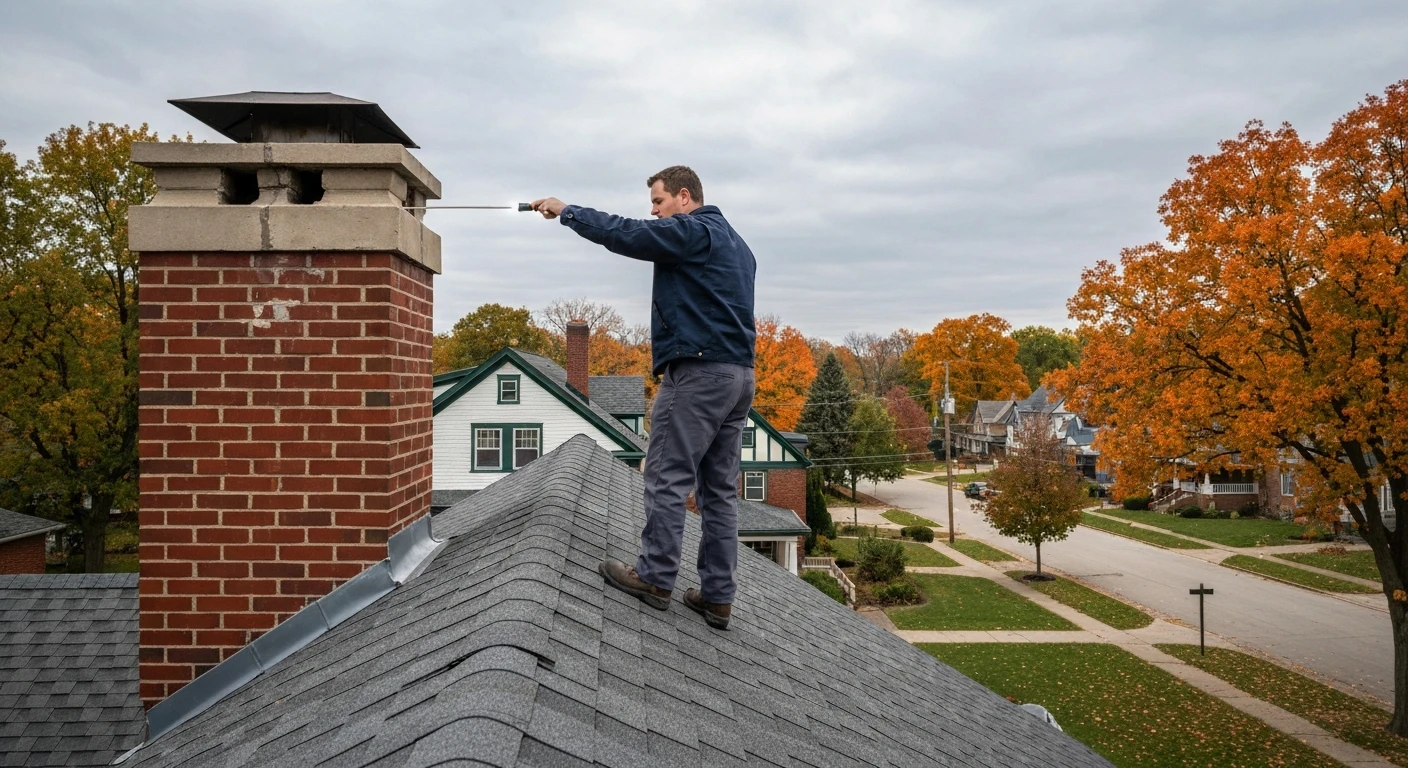
Most homeowners in Indianapolis think about their fireplace twice a year: when they want to use it and when something goes wrong. Scheduling an annual chimney inspection sits somewhere between those two moments, and it is one of the more straightforward things you can do to keep a fireplace running safely. The National Fire Protection Association standard NFPA 211 lays out three inspection levels. Levels 1 and 2 are the ones most homeowners encounter. Knowing what each covers helps you ask the right questions and understand what your inspector finds.
Why an Annual Chimney Inspection Is Not the Same as a Chimney Sweep
People often book a sweep and assume the inspection is included. What usually happens is that a sweep cleans the flue of creosote and debris. An inspection looks at condition. Those are two different jobs. A sweep technician running a brush through your liner is not evaluating the liner for cracks, gaps, or deteriorating mortar joints.
An inspection follows a documented checklist. The technician looks at the firebox, the damper, the smoke chamber, the flue liner, the chimney crown, the flashing, and the masonry exterior. A sweep does not require any of that evaluation. You can get both done in one appointment, but they are separate tasks with separate purposes.
What a Level 1 Inspection Covers and When It Is the Right Choice
A Level 1 inspection covers all accessible parts of the chimney. The technician does not use a camera, and nothing gets opened up or disassembled. This level works well when your fireplace use has not changed, you burn the same fuel type, and the system has no known problems.
The technician checks the firebox for cracks or spalling firebrick. They test the damper for smooth operation and a solid seal. They look at the smoke chamber and smoke shelf for debris or damage. They visually inspect the flue from above and below. They check the chimney crown for cracking, the cap for secure fit, the flashing at the roofline for separation, and the exterior masonry for open joints or water staining. A Level 1 inspection gives you a clear picture of the system’s visible condition.
What a Level 2 Inspection Adds and When Your Chimney Requires One
A Level 2 inspection includes everything in Level 1 plus a camera scan of the flue liner. The camera goes the full length of the liner and records the footage. This lets the inspector see cracks, gaps, offset joints, or liner collapse that no visual check from the top or bottom can catch.
NFPA 211 requires a Level 2 inspection any time there is a change in the system or an event that could have damaged it. In Indianapolis, that means you need a Level 2 when you buy a home, switch fuel types, convert from wood to gas or vice versa, sell the property, or have a chimney fire. A hard storm with hail or a lightning strike also qualifies. If your home inspector flagged the chimney or you have not had a camera inspection in more than five years, a Level 2 is worth scheduling.
What Inspectors Look for Inside an Indianapolis Home’s Fireplace System
Indianapolis sits in a climate with cold winters, freeze-thaw cycles from November through March, and humid summers. That combination does specific damage to chimneys over time. Water gets into small cracks in the crown or mortar joints, freezes, expands, and opens those cracks wider each season. Inspectors here watch closely for spalling brick on the exterior and deteriorating mortar joints at the cap and crown.
Inside the firebox, the inspector checks refractory panels or firebrick for cracks deeper than 1/8 inch. At the damper, they confirm the plate moves freely and seals without gaps. In the smoke chamber, they look for corbeled brick that has shifted or mortar that has fallen away. On gas fireplaces, the inspector checks the burner assembly, the pilot, the gas valve, and the venting path. Wood and gas systems share some inspection points but differ on the combustion side.
A Thorough Annual Chimney Inspection Should Cover All of These
- Firebox condition: cracks in firebrick or refractory panels
- Damper operation and seal: opens fully, closes without gaps
- Smoke chamber and smoke shelf: mortar condition, debris buildup
- Flue liner: viewed from top and bottom, camera scan at Level 2
- Chimney crown: cracks, edge separation, missing sealant
- Flashing at the roofline: separation from the chimney, lifted edges
- Chimney cap: secure fit, mesh screen intact, rust or corrosion
- Exterior masonry: open mortar joints, spalling brick, efflorescence
- Signs of water intrusion: staining inside the firebox, rust on the damper, damp smell
- Gas appliance components (where applicable): burner, pilot, valve, venting path
How to Read the Inspection Report and Decide What Needs Action Now Versus Later
A good inspection report lists findings by location and assigns a priority. Some items are safety concerns that need attention before you use the fireplace. A cracked flue liner, a missing chimney cap, or a damper that will not seal fall into that group. Others are maintenance items you can schedule within the season, like repointing a few mortar joints or resealing the crown.
Ask your inspector to walk you through the findings. The question worth asking is whether the system is safe to operate right now. If the answer is no, find out what repair changes that answer. If the answer is yes, ask which items will get worse if you wait a full year. That narrows down what is urgent versus what belongs on next year’s list.
The Right Time of Year to Schedule Your Annual Chimney Inspection in Indianapolis
Late summer through early fall is the window most chimney professionals recommend. In Indianapolis, that means August through October. The fireplace season typically runs from November through February. Scheduling your annual chimney inspection in September or October gives you time to complete any repairs before the first cold stretch arrives.
Spring is the second-best window. After a full winter of use, an inspection in March or April shows exactly what the season produced: creosote buildup, any liner damage from a hard burn, or water intrusion that showed up during snowmelt. Either window works. What tends to cause problems is waiting until late October or November, when appointment slots fill up and repair work before the cold becomes harder to fit in.
Frequently Asked Questions
How is a chimney inspection different from what a home inspector checks?
A home inspector looks at the chimney as part of a full property review. They typically check the exterior masonry, the crown, and the cap from the roofline, and they look at the firebox opening from inside. They are not trained or equipped to scan the flue liner with a camera or evaluate the smoke chamber and damper in detail.
A certified chimney inspector follows NFPA 211 standards and focuses entirely on the fireplace system. The annual chimney inspection they perform is more thorough and produces a written report that documents each component individually. If a home inspector flags the chimney, a Level 2 inspection by a chimney professional is the appropriate follow-up.
How often does my chimney need a Level 2 inspection versus a Level 1?
Most chimneys with no changes in use and no events qualify for a Level 1 each year. A Level 2 is not an annual requirement unless something triggers it. The triggers are specific: buying or selling the home, changing the fuel type, having a chimney fire, or experiencing an event like a lightning strike or major storm.
That said, if you have never had a camera inspection and your chimney is more than 15 years old, a Level 2 gives you a baseline record of the liner’s condition. After that baseline, annual Level 1 inspections are typically enough unless a trigger event occurs.
What triggers the need for a Level 2 inspection in Indianapolis?
NFPA 211 lists the triggers clearly. A real estate transaction is one: buyers and sellers both benefit from knowing the liner’s condition before closing. Converting from a wood-burning fireplace to a gas insert, or the other way, requires a Level 2 because the liner requirements differ between fuel types. A chimney fire, even a small one, requires a Level 2 before the fireplace goes back into use.
In Indianapolis specifically, a severe hail event or a tornado warning that caused structural movement in the area is worth treating as a trigger. Masonry chimneys are vulnerable to ground movement and impact damage that does not always show from the exterior.
Can I get an inspection and a sweep done on the same appointment?
Yes, and combining them is common. Most chimney professionals offer both in one visit. The order typically goes sweep first, then inspection, because a clean flue gives the inspector a clearer view of the liner and smoke chamber surfaces. If you schedule the inspection before a sweep, heavy creosote buildup can obscure cracks or gaps in the liner during the camera scan.
Confirm with your technician when you book. Ask whether the quoted appointment includes both services or just one. Getting the annual chimney inspection and the sweep handled together saves a second scheduling window and means you head into the burn season with the full picture.
The Short Version
An annual chimney inspection is not the same as a cleaning, and Level 1 and Level 2 are not interchangeable. Level 1 covers everything visible without a camera. Level 2 adds a full flue scan and is required whenever the system changes or takes a hit. In Indianapolis, schedule in late summer or early fall so repairs have time to get done before November. Read the report with your inspector and separate the safety items from the maintenance items. That conversation is where the inspection pays off.