
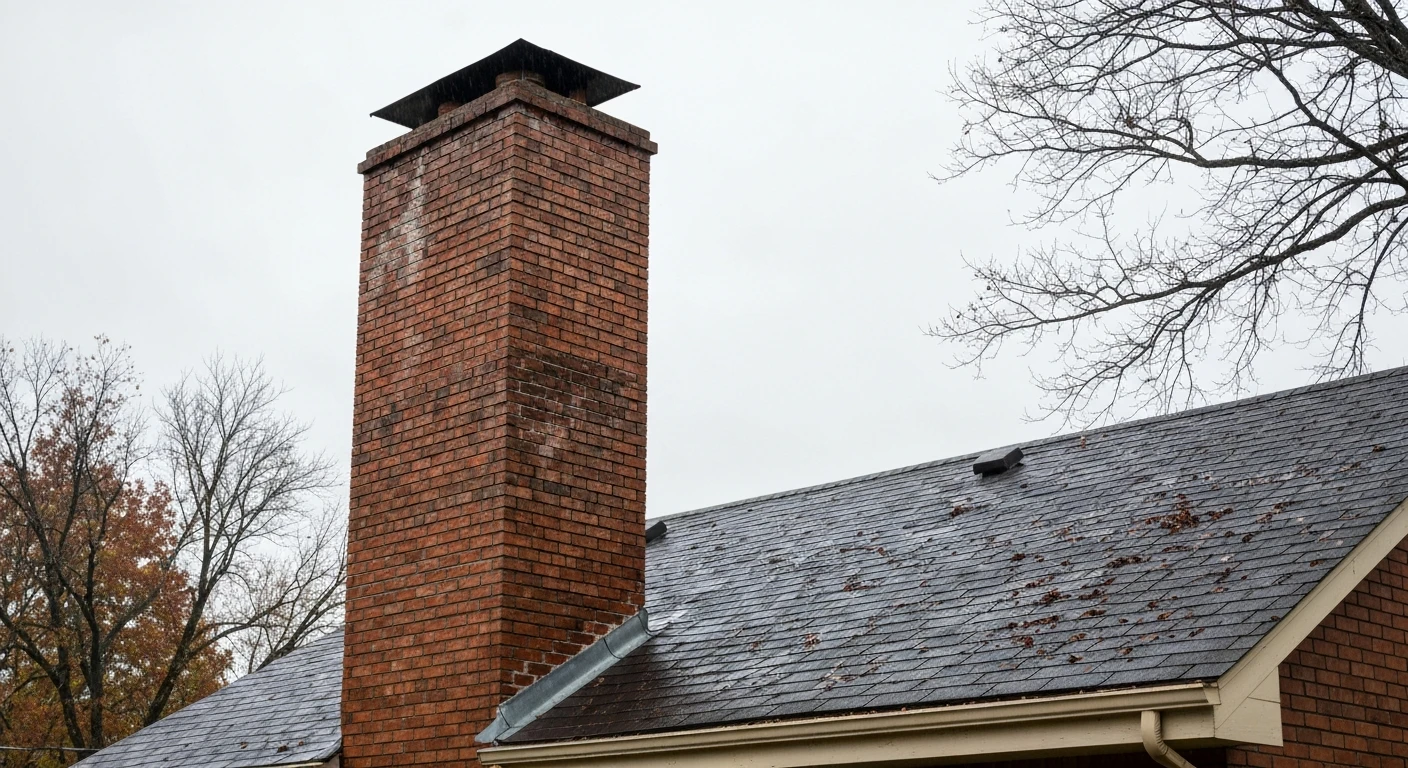
Water stains near a fireplace are easy to spot. Figuring out where the water entered is a different problem entirely. Chimney leak repair in Indianapolis is complicated by the fact that water travels before it shows up. A stain on a second-floor ceiling might trace back to a cracked crown at the top of the chimney, three feet away from where the water finally drips. Indianapolis winters make this worse. The freeze-thaw cycle here runs roughly November through March, and every freeze pulls existing cracks open a little more. By the time spring arrives, what started as a hairline gap in the mortar can move enough water to cause real damage inside the home.
Why Chimney Leaks Are Harder to Diagnose Than Roof Leaks
A roof leak usually shows up close to where the water entered. Chimney leaks behave differently. Water can enter at the crown, travel down the flue liner, and pool at the smoke shelf before showing up as a stain on the firebox wall. Or it enters at the flashing, wicks into the surrounding masonry, and appears as a damp patch on an interior wall weeks later.
Most people assume the chimney cap or the roof flashing is always to blame. Those are common sources, but not the only ones. A chimney inspection looks at five or six distinct entry points before drawing a conclusion. Skipping that step and going straight to waterproofing often means spending money on the wrong fix. The water finds another way in by the following winter.
The Five Most Common Entry Points for Water in an Indianapolis Chimney
The chimney crown sits at the very top and takes the most direct weather exposure. Crowns made from plain mortar, rather than a poured concrete mix, tend to crack within 5 to 10 years. Once a crack forms, water gets in, freezes, and widens the crack through the winter.
The flashing is the metal seal where the chimney meets the roofline. Step flashing and counter flashing both need to stay watertight. Indianapolis roofing contractors sometimes install flashing without proper counterflashing overlap, and that joint separates over time.
Mortar joints between bricks absorb water and spall when it freezes. A chimney with soft or crumbling mortar at the joints is letting water into the masonry with every rain. The chimney cap, which covers the flue opening, fails when the metal rusts through or the concrete base cracks. And finally, the flue liner itself can develop cracks that let water seep into the chase. Each entry point has a different repair path.
How Freeze-Thaw Cycles Create Leaks That Do Not Show Up Until Spring
Indianapolis averages around 20 to 25 freeze-thaw cycles per winter season. Each cycle works like a wedge. Water enters a small crack, freezes overnight, expands by about 9 percent in volume, and forces the crack open. When it thaws the next day, a slightly larger gap remains. This repeats through January and February.
The reason leaks often go undetected until March or April is that frozen water does not flow. The chimney may be taking on water all winter, but the evidence stays trapped in the masonry until temperatures rise. When it finally melts, the water moves fast, and the staining on ceilings or walls appears to come out of nowhere. Chimney leak repair done in fall catches these cracks before the first freeze, which is why a pre-winter inspection matters more in the Midwest than in warmer climates.
Signs Your Chimney May Be Leaking
Not every chimney leak is obvious. Some of these signs show up months before any visible water damage appears inside the home.
- Water stains on the ceiling or wall near the fireplace, often yellowish or brown in color
- White chalky stains on exterior brick, called efflorescence, which indicate water moving through the masonry
- Rust on the damper or firebox, which forms when moisture sits inside the firebox over time
- A musty smell from the fireplace during warm weather, caused by moisture trapped in the flue or smoke chamber
- Crumbling or recessed mortar joints visible from the ground, a sign that the mortar has lost its bond
- Spalling brick faces, where the brick surface pops or flakes off after repeated freeze-thaw cycles
- A chimney leak repair job that was done more than 10 years ago and has not been inspected since
What the Repair Process Looks Like Depending on Where the Leak Originates
Crown repairs usually involve removing the old mortar crown and pouring a properly mixed concrete crown with a slight overhang so water drains away from the brick below. This is a one-day job in most cases. Flashing repairs range from resetting the counterflashing with fresh caulk to tearing out and replacing the entire flashing system when the metal has rusted through or was installed incorrectly the first time.
Tuckpointing addresses failing mortar joints. A mason cuts out the damaged mortar to a depth of about 3/4 inch and replaces it with fresh mortar matched to the original color and composition. On a full chimney exterior, tuckpointing can take two to three days depending on the height and condition. Flue liner cracks require a camera inspection first, followed by either a brushed-in liner sealant or a full stainless steel liner insert if the damage is extensive. Each repair type is tied to a specific entry point, which is why the diagnosis step cannot be skipped.
Why Waterproofing Alone Is Not Always the Right First Step
Waterproofing sealant applied to a chimney exterior is a vapor-permeable coating. It lets moisture vapor escape from inside the masonry while blocking liquid water from entering the surface. That works well as a preventive step on a chimney in decent condition. Applied over cracked crowns or failing mortar, it traps existing moisture inside and accelerates the spalling damage it was meant to prevent.
The correct sequence is: inspect first, repair any active damage, then apply waterproofing as a final protective layer. Chimney leak repair that skips the repair phase and goes straight to coating is a common and expensive mistake. The coating may look fine on the surface, but the underlying cracks continue to move water through the masonry beneath it.
When to Act and What Happens If a Chimney Leak Is Left Through Another Winter
A small crown crack left through one Indianapolis winter typically doubles in width by spring. Leave it through a second winter, and the water reaching the smoke chamber starts to deteriorate the brick and mortar inside the firebox, areas that are far more expensive to repair than the crown that caused the problem. Rust on a damper is annoying. A deteriorated smoke chamber or a cracked flue liner is a safety issue that affects how the fireplace drafts and whether combustion gases stay inside the flue.
Fall is the practical window for chimney leak repair in Indianapolis, before the ground freezes and before mortar work becomes difficult in cold temperatures. Most masonry products need temperatures above 40 degrees Fahrenheit to cure properly. Waiting until December limits what repairs are even possible until spring.
Frequently Asked Questions
Can a chimney leak cause structural damage to my home?
Yes, over time. Water that enters through the chimney and saturates surrounding framing or sheathing can lead to rot, mold growth, and weakened structural members near the fireplace opening. This is not a first-year outcome in most cases, but a leak left for several winters without chimney leak repair can cause damage that goes well beyond the chimney itself.
The firebox and smoke chamber are also at risk. When water deteriorates the mortar inside the firebox, it can allow heat and combustion gases to contact materials they should not reach. A Level 2 chimney inspection, which includes a camera scan of the flue, can identify how far water damage has progressed before it reaches critical areas.
Is chimney leak repair covered by homeowners insurance in Indiana?
It depends on the cause. Sudden damage from a storm, such as flashing torn loose by wind, is typically covered. Deterioration from age or deferred maintenance is usually not. Indiana homeowners should document the condition of the chimney annually and report storm-related damage quickly, since insurers often distinguish between pre-existing wear and storm-caused failure.
If a leak leads to interior water damage and the cause is a storm event, the interior damage may be covered even if the chimney repair itself is not. An inspection report from a qualified chimney professional can help establish cause and timing, which matters when filing a claim.
How do I know if my flashing or my crown is the source of the leak?
The general rule is location. If water shows up on the ceiling or wall immediately adjacent to where the chimney meets the roofline, flashing is the more likely source. If the water appears higher up, on a ceiling directly below the chimney top, or shows up inside the firebox itself, the crown or cap is the more likely entry point.
That said, both can fail at the same time, especially on chimneys older than 20 years. A hose test, where water is applied systematically to one area at a time, is a reliable way to isolate the source. A chimney professional can usually complete this test during the same visit as the inspection.
How long does chimney leak repair take to complete?
Crown replacement and cap installation typically take one day. Flashing replacement runs one to two days depending on roof pitch and chimney size. Tuckpointing a full exterior can take two to three days. Flue liner installation ranges from half a day for a simple liner drop to two days for a full stainless steel liner with smoke chamber repair.
Most chimney leak repair jobs in Indianapolis can be scheduled and completed within a week once a diagnosis is in hand. The exception is when masonry repairs are needed in cold weather, since mortar curing requires temperatures above 40 degrees and warm-weather scheduling may be necessary for some jobs started late in the season.
The Takeaway on Chimney Water Problems
Water and masonry are a slow-moving problem that tends to announce itself at the worst time, usually the first cold morning of the season when the fireplace finally gets used again. Chimney leak repair done before winter removes that risk. It also costs less than repairing the interior damage that builds up when a known leak goes another year without attention. Start with an inspection, identify the actual entry point, and make the repair in the right order. Waterproofing comes last, not first.