
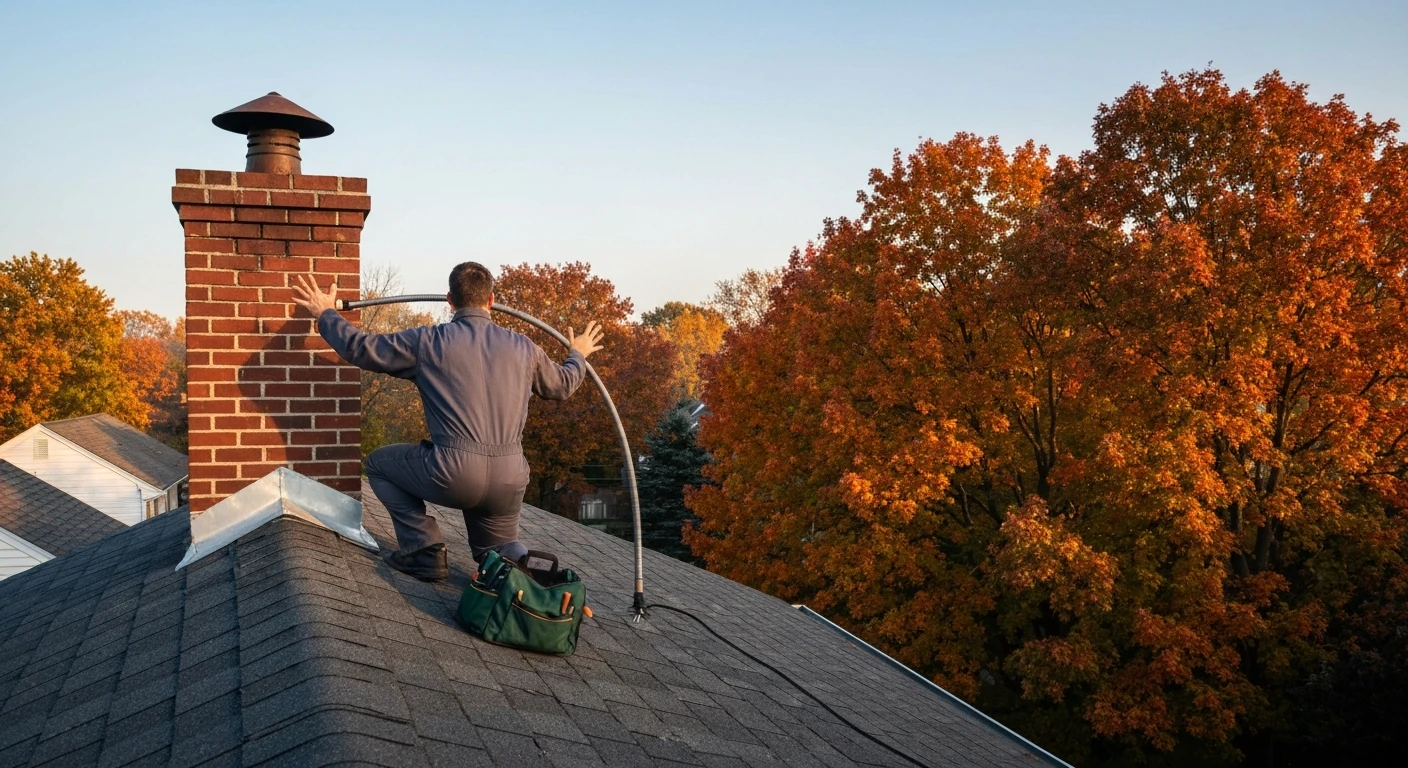
Most homeowners in Indianapolis schedule a chimney sweep service and aren’t sure what they’re actually signing up for. Is it just cleaning? Does someone go on the roof? Will there be soot everywhere? The short version is that a proper sweep covers more than brushing out the flue. A trained technician arrives with specific equipment, works through a defined process, and hands you a written summary before leaving. Here’s what that looks like from start to finish.
What a Chimney Sweep Service Actually Covers
A chimney sweep service is not a single task. It combines cleaning, inspection, and documentation into one appointment. The technician clears creosote and debris from the flue liner, checks the firebox, examines the damper, and looks at the exterior crown and cap. Most homeowners are surprised to learn the sweep also looks at the smoke chamber above the firebox, which traps creosote faster than the flue in many older Indianapolis homes.
The National Fire Protection Association standard NFPA 211 recommends annual inspection and cleaning for any chimney in regular use. In Indianapolis, where wood-burning season runs roughly October through March, that means scheduling service every fall. Gas fireplaces also need annual attention, though the buildup is different from wood-burning systems.
The Tools a Certified Sweep Brings to an Indianapolis Home
A certified sweep arrives with a set of specific tools, not just a wire brush. Rotary cleaning systems use flexible rods with brush heads sized to the flue diameter. Most Indiana homes have 8-inch or 13-inch tile-lined flues, and using the wrong brush size leaves sections uncleaned. A HEPA-rated vacuum runs continuously during cleaning to keep fine particles out of the living space.
Video inspection equipment is standard on most appointments. A small camera on a flexible rod travels the full length of the flue and records what it finds. This matters because the camera shows cracks in the tile liner or mortar gaps that no one can see with a flashlight. The technician also brings a creosote severity gauge to classify the buildup level, which drives the recommendation at the end of the visit.
How Creosote Buildup Is Measured and Why the Level Changes the Recommendation
Creosote forms in three stages. Stage one is a light, flaky deposit that standard brushing removes in one pass. Stage two is a harder, tar-like layer that requires a rotary cleaning system and sometimes a chemical treatment applied before the brush. Stage three is a glazed coating that bonds to the tile liner and usually means a chemical treatment over multiple visits before mechanical cleaning can work.
The sweep measures buildup thickness using a gauge pressed against the flue wall. A quarter-inch of stage-two buildup in a wood-burning fireplace used three times a week is enough to change the appointment from a standard cleaning to a two-stage process. The level matters because it directly affects fire risk. Creosote ignites at around 450 degrees Fahrenheit, and a house fire moving through the flue can reach over 2,000 degrees.
What the Sweep Checks Beyond the Flue
The flue liner gets the most attention, but the technician also inspects several other components. The firebox floor and walls take direct heat, and the refractory panels that line the inside crack after years of thermal cycling. A crack wider than 1/16 of an inch typically needs repair before the fireplace is safe to use again.
The damper opens and closes the flue and is supposed to seal tightly when the fireplace is not in use. A warped or corroded damper lets cold Indianapolis air pour into the house all winter. The technician checks the damper plate for fit and corrosion. Outside, the chimney crown, the cap, and the flashing where the chimney meets the roof are all part of the sweep’s review. Water intrusion usually starts at those three points.
Before the Technician Arrives: A Short Checklist
A little preparation makes the appointment faster and keeps your home cleaner. Here is what to do before the sweep arrives:
- Clear the hearth area of any tools, decorations, or firewood stored nearby
- Move furniture at least three feet back from the fireplace opening
- Secure pets in another room so they stay calm and out of the way
- Locate the last chimney sweep service report if you have one, so the technician can compare to previous findings
- Make sure the damper handle is accessible and not blocked by a glass door or tool set
If the fireplace has a gas log set, let the technician know when you call. Gas systems have a slightly different pre-visit checklist and different cleaning steps than wood-burning units.
How Long the Appointment Takes
A standard chimney sweep service on a single wood-burning fireplace in an average Indianapolis home takes between 45 minutes and 90 minutes. Homes with two fireplaces or a fireplace plus an insert typically run 2 to 3 hours. Stage-two or stage-three creosote adds time because chemical treatment needs a dwell period before brushing.
The video inspection adds roughly 15 minutes per flue. Some homeowners skip the camera to save time, but skipping it means missing cracks in the liner that cleaning alone won’t reveal. Most technicians treat the camera review as a standard part of the visit rather than an add-on.
What You Get at the End: Report, Photos, and Next Steps
When the appointment wraps, the technician walks you through the findings before leaving. You receive a written report that covers the cleaning work done, the creosote stage found, the condition of each component inspected, and any recommended repairs. If the video camera was used, photos or video clips from inside the flue are typically included.
The report tells you whether the fireplace is ready to use, needs a repair before use, or needs a follow-up service. Repairs like a cracked firebox panel or a deteriorated damper seal are usually quoted at the appointment. You can then schedule the repair separately or ask the technician to complete it the same day if parts are on the truck.
Frequently Asked Questions
How often should I schedule a chimney sweep service in Indianapolis?
Once a year is the standard recommendation for any fireplace in regular use. NFPA 211 calls for annual inspection of all chimneys, fireplaces, and venting systems. In Indianapolis, fall is the most common time because it puts the appointment just before heating season. If you burn wood more than three times a week through winter, some technicians recommend a mid-season check as well.
Will the sweep make a mess inside my house?
A well-equipped technician keeps the mess contained. The HEPA vacuum runs the entire time brushing is happening, which pulls fine soot particles before they reach the room. Drop cloths go down around the hearth. Most homeowners notice little to no dust when the appointment is done correctly. If the flue has heavy stage-two or stage-three buildup, there is more debris to manage, but the process is the same.
Can I use my fireplace the same day as the sweep?
In most cases, yes. If the report shows the fireplace is clear and no repairs are needed, you can light a fire that evening. If the technician applied a chemical creosote treatment as part of the chimney sweep service, there may be a waiting period of 24 hours before the first burn. The technician will tell you clearly at the end of the appointment whether the fireplace is cleared for use.
What is the difference between a chimney sweep and a chimney inspection?
A chimney sweep focuses on cleaning the flue and firebox. A chimney inspection is a structured evaluation of the entire chimney system, documented to NFPA 211 standards. There are three inspection levels. Level one is a visual check during a standard cleaning. Level two involves video scanning of the flue and is required after a chimney fire, a home sale, or a change in the heating system. Level three is invasive and rare, used only when hidden damage is suspected.
Wrapping Up
A chimney sweep service is a predictable, well-defined appointment when you know what to expect going in. The technician cleans the flue, inspects the system top to bottom, and gives you a written record of what was found. In Indianapolis, scheduling that appointment each fall before the first fire of the season is the most straightforward way to keep the fireplace running safely. The report you get at the end is worth keeping, because the next technician will use it as a baseline for what changed year to year.