
Blog
Chimney Masonry Repair in Indianapolis: Spalling Bricks, Freeze-Thaw Damage, and What the Fix Involves
Indianapolis winters crack and spall chimney masonry faster than most homeowners realize. Here is what chimney masonry repair covers and when to stop waiting.
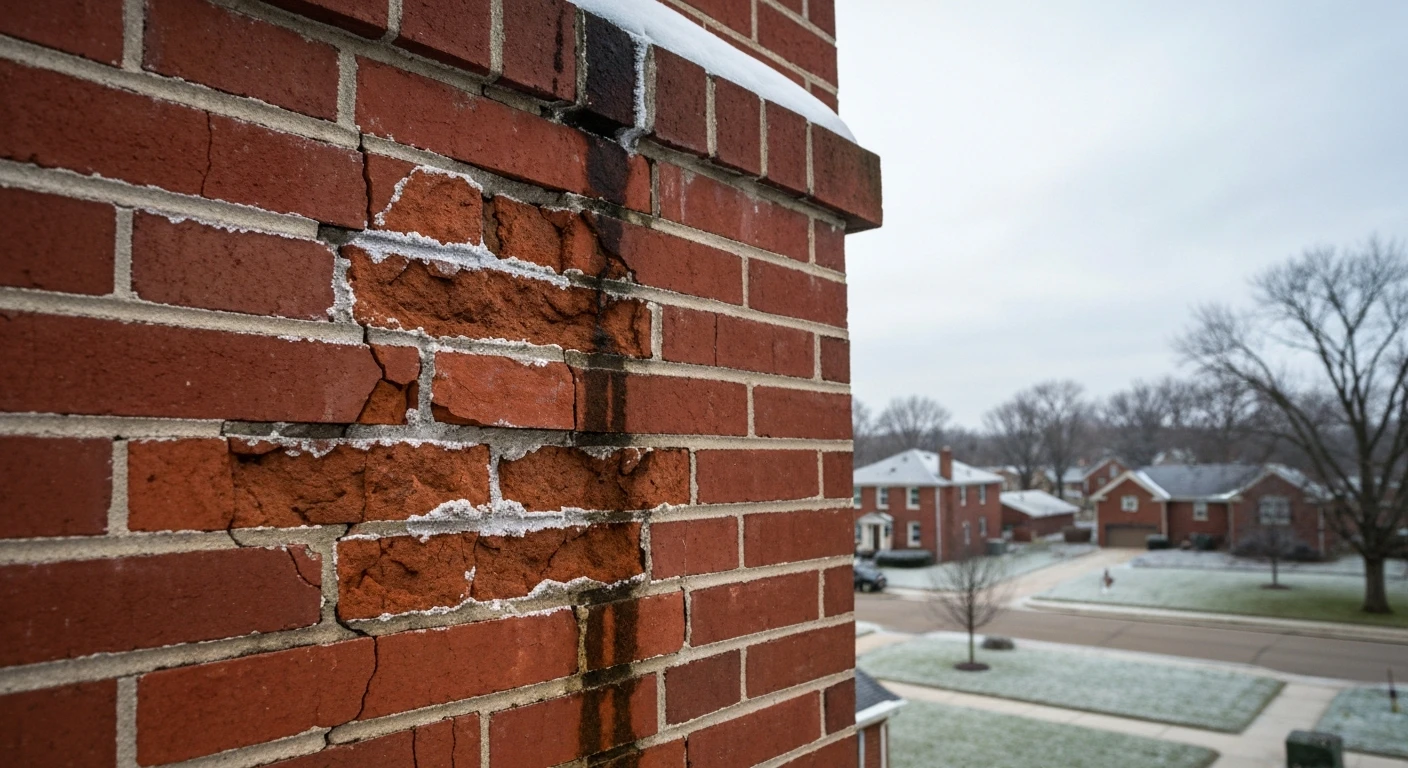
Indianapolis averages around 100 freeze-thaw cycles per winter season. Each cycle pushes moisture deeper into brick and mortar, expanding as it freezes and contracting as it thaws. That repeated movement is what drives chimney masonry repair needs here more than in warmer climates. If your chimney is more than 15 years old and you have not had the exterior inspected, there is a reasonable chance damage is already underway, even if nothing looks alarming from the ground.
What Chimney Masonry Repair Covers Beyond Tuckpointing
Most homeowners hear “masonry repair” and think tuckpointing, which is the process of grinding out deteriorated mortar joints and packing in fresh mortar. Tuckpointing is common, but it is only one part of what chimney masonry repair actually covers. Depending on what a technician finds, the work might include spalling brick replacement, crown repair or full crown replacement, flashing resealing, and waterproofing treatment applied to the entire chimney face.
The chimney crown is the concrete or mortar cap that sits at the very top of the stack and sheds water away from the flue opening. Cracks in the crown let water run directly into the chase and down toward the firebox. Crown repairs are often done alongside tuckpointing because both problems tend to develop on the same timeline. Waterproofing with a vapor-permeable sealant, such as products in the ChimneySaver line, is typically applied last and helps slow future freeze-thaw penetration without trapping moisture inside the brick.
How Indianapolis Freeze-Thaw Cycles Cause Spalling and Cracking
Brick is not fully solid. It contains small pores that absorb water during rain or snow melt. When temperatures drop below 32 degrees Fahrenheit, that trapped water expands by roughly 9 percent in volume. The pressure from that expansion has nowhere to go except outward through the face of the brick. That is what causes spalling: the outer face of the brick literally pops or flakes off.
Mortar joints fail even faster than the brick itself because mortar is more porous by design. Standard Type N mortar, which is common in residential chimneys built before the 1990s, softens quickly under repeated freeze-thaw stress. Once the joints start to recede, water gets behind the brick face and the whole cycle accelerates. In Indianapolis neighborhoods with older housing stock, like Broad Ripple or Irvington, you see this progression on chimneys that were never repointed after the original construction.
How to Recognize Masonry Damage Before It Gets Expensive
Catching problems early keeps the repair scope small. A chimney that needs tuckpointing on two courses of brick is a manageable job. That same chimney, left another two winters, may need partial rebuilding from the roofline up. The exterior signs are readable if you know what to look for.
- Brick faces that are flaking, chipping, or have chunks missing — classic spalling from freeze-thaw damage
- Mortar joints that look recessed, crumbly, or hollow when you press them lightly
- White chalky streaks on the brick face, called efflorescence, which indicate water is moving through the masonry
- Cracks running horizontally along mortar joints, which often signal settling or freeze-thaw movement
- Cracks running vertically or in a stair-step pattern through the brick, which can point to more serious structural shifting
- A chimney crown with visible cracks, chips, or sections that have broken away entirely
- Rust stains on the exterior, which usually mean the flashing or a metal component above is failing and sending water down the face
- Brick pieces or mortar chunks in your gutters or on the roof surface near the chimney base
From ground level, binoculars help. A proper inspection from a technician on the roof gives you a much clearer picture, especially of the crown and the top three to four courses of brick where damage almost always starts.
What Materials Are Used in Chimney Masonry Repair
The mortar mix matters a lot. Using the wrong type is one of the most common mistakes in DIY chimney repairs. Type S mortar is generally the correct choice for chimneys because it balances strength and flexibility better than Type N or Type M for above-grade masonry exposed to weather. Type M is too rigid and can actually cause surrounding bricks to crack under movement. A good contractor matches the new mortar to the original mix as closely as possible, both in composition and color.
For replacement bricks, the goal is matching the original unit as closely as possible in size, porosity, and compressive strength. Salvaged bricks from the same era are sometimes the best match on older Indianapolis homes. New bricks that are harder or denser than the originals can cause problems because they do not move with the chimney the same way. Chimney crowns are typically rebuilt using a pre-mixed crown repair product or cast-in-place mortar with a sloped profile to encourage water runoff away from the flue liner.
Prefab vs. Masonry Chimneys in Carmel, Fishers, and Westfield Homes
Newer construction in Carmel, Fishers, and Westfield tends to use prefabricated metal chimneys with a wood-framed chase covered in siding or a thin brick veneer. These are not true masonry chimneys, and they have a different set of failure points. The brick or stone on the outside is cosmetic, not structural, so the freeze-thaw concern shifts to the siding, the chase cover at the top, and the metal firebox components inside.
Older Indianapolis homes, generally built before 1985, are more likely to have full masonry chimneys built from the foundation up with clay tile flue liners. These are the chimneys where chimney masonry repair is most relevant because every component, from the footing to the crown, is masonry. If you are not sure which type you have, look at the roofline where the chimney exits. A full masonry chimney typically has no visible siding seam and shows consistent brick coursing from the roofline up.
When Masonry Repair Is Enough and When a Partial Rebuild Is Needed
Chimney masonry repair handles surface and joint deterioration well. Tuckpointing and brick replacement work when the underlying structure is still sound. The question a technician asks is whether the damage is cosmetic and surface-level or whether it has compromised the courses of brick that carry load and keep water out at a deeper level.
A partial rebuild, sometimes called a rebuild from the roofline, becomes necessary when multiple courses of brick are so damaged that repointing cannot restore a watertight surface. This typically happens when a chimney has gone 10 or more years without any maintenance and has experienced several hard Indianapolis winters. Leaning or visibly out-of-plumb chimneys are a more serious situation that may require evaluation of the full structure, including the foundation footing. Catching problems at the tuckpointing stage is always less disruptive and less costly than reaching the rebuild stage.
Frequently Asked Questions
What causes bricks to spall on an Indianapolis chimney?
Spalling happens when water trapped inside the brick freezes and forces the outer face to break away. Indianapolis winters create the right conditions for this because temperatures regularly cycle above and below freezing throughout the season. Bricks that were not sealed, or that have aging mortar joints allowing water in, are most vulnerable.
Soft, older brick types common in pre-1970s construction absorb more water than modern units and spall faster. Once spalling starts, the exposed interior of the brick absorbs even more water and the damage compounds quickly over one or two additional winters.
Can I repair chimney masonry myself with store-bought mortar?
Small cosmetic cracks in a chimney crown can sometimes be addressed with a pre-mixed crown repair product sold at home improvement stores. Tuckpointing, however, is harder to do correctly than it looks. Using the wrong mortar type, not cutting out enough of the old joint, or not packing the new mortar properly all cause the repair to fail within a season or two.
The bigger risk with DIY chimney masonry repair is missing what is underneath. A surface crack can look minor while hiding a larger void or a failed course of brick behind it. A technician with a proper inspection can tell you whether what you see is the whole problem or just the edge of one.
How long does chimney masonry repair last if done correctly?
Tuckpointing done with the correct mortar mix and proper joint preparation typically lasts 20 to 30 years before it needs to be redone. Brick replacement, when matched well and set correctly, should outlast the repair mortar around it. Crown repairs with a flexible sealant over the patched area can last 10 to 15 years depending on the product and how well the surface was prepared before application.
Waterproofing treatments applied after chimney masonry repair generally need to be reapplied every 5 to 10 years. The overall lifespan of any repair depends on how well the underlying problem was addressed, not just the surface finish.
Does insurance cover chimney masonry damage from freeze-thaw cycles?
Most standard homeowner policies in Indiana treat freeze-thaw deterioration as gradual wear and tear rather than sudden damage, which means claims for spalling and mortar joint failure are typically denied. Policies vary, so it is worth reading your specific coverage language or asking your agent directly about masonry deterioration.
If a sudden event, like an ice storm causing a section of brick to collapse, caused the damage, coverage is more likely. Gradual freeze-thaw damage that built up over several seasons is almost always considered a maintenance issue under standard policy terms.
The Bottom Line on Chimney Masonry in Indianapolis
Indianapolis winters are hard on masonry. The combination of moisture and repeated freezing means chimneys here age faster than in drier or warmer climates. Chimney masonry repair done at the right time, before damage reaches the structural courses, keeps the job manageable. Waiting until bricks are falling or water is getting inside turns a repair into a rebuild. An exterior inspection every two to three years, especially on chimneys over 20 years old, gives you enough lead time to catch problems while they are still straightforward to fix.